Product strategy

TripSapien
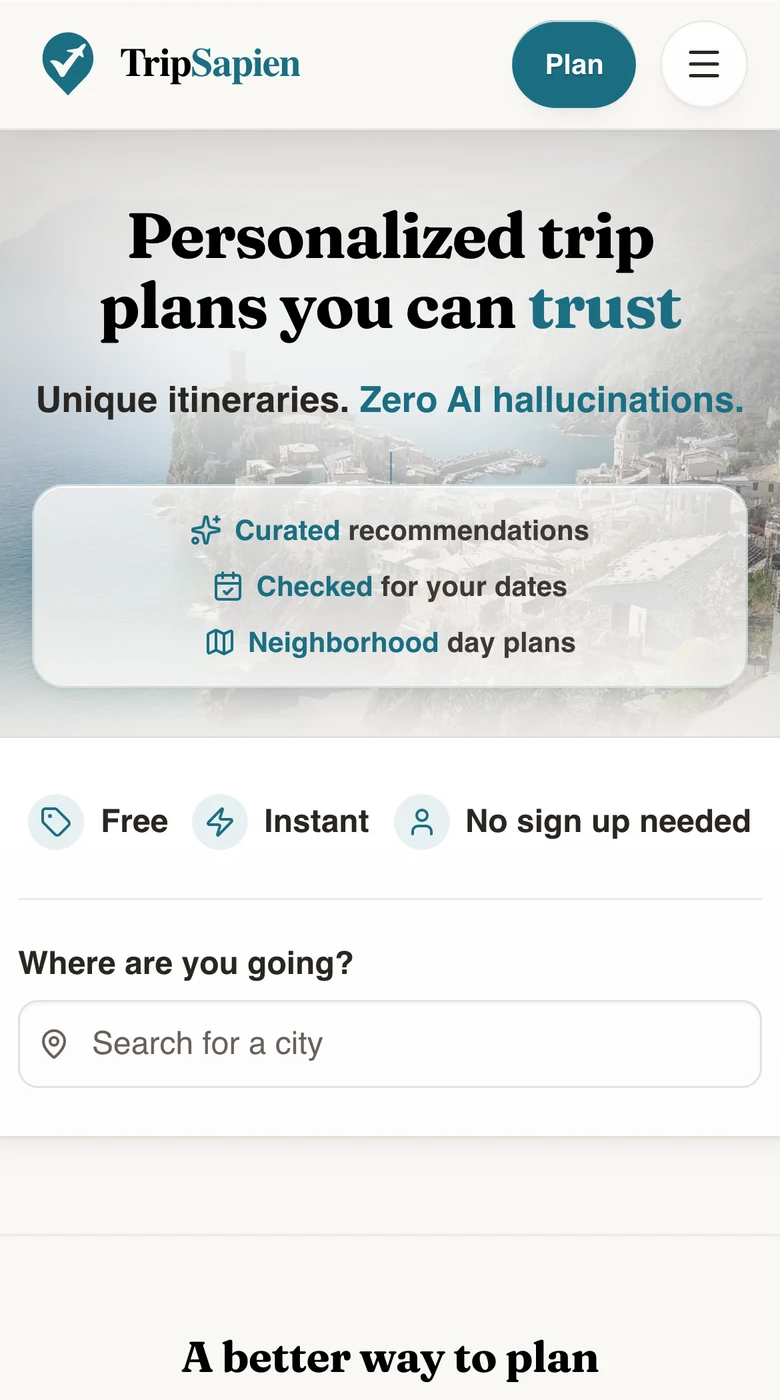
Personalized trip plans you can trust — curated recommendations, checked for your dates.
- Who it's for
- Type-A travelers who over-research a trip, then lose a morning to a locked door.
- The problem
- Travelers collect recommendations for weeks — friends, blogs, Reddit, ChatGPT — then re-check every place by hand against their dates.
- What it does
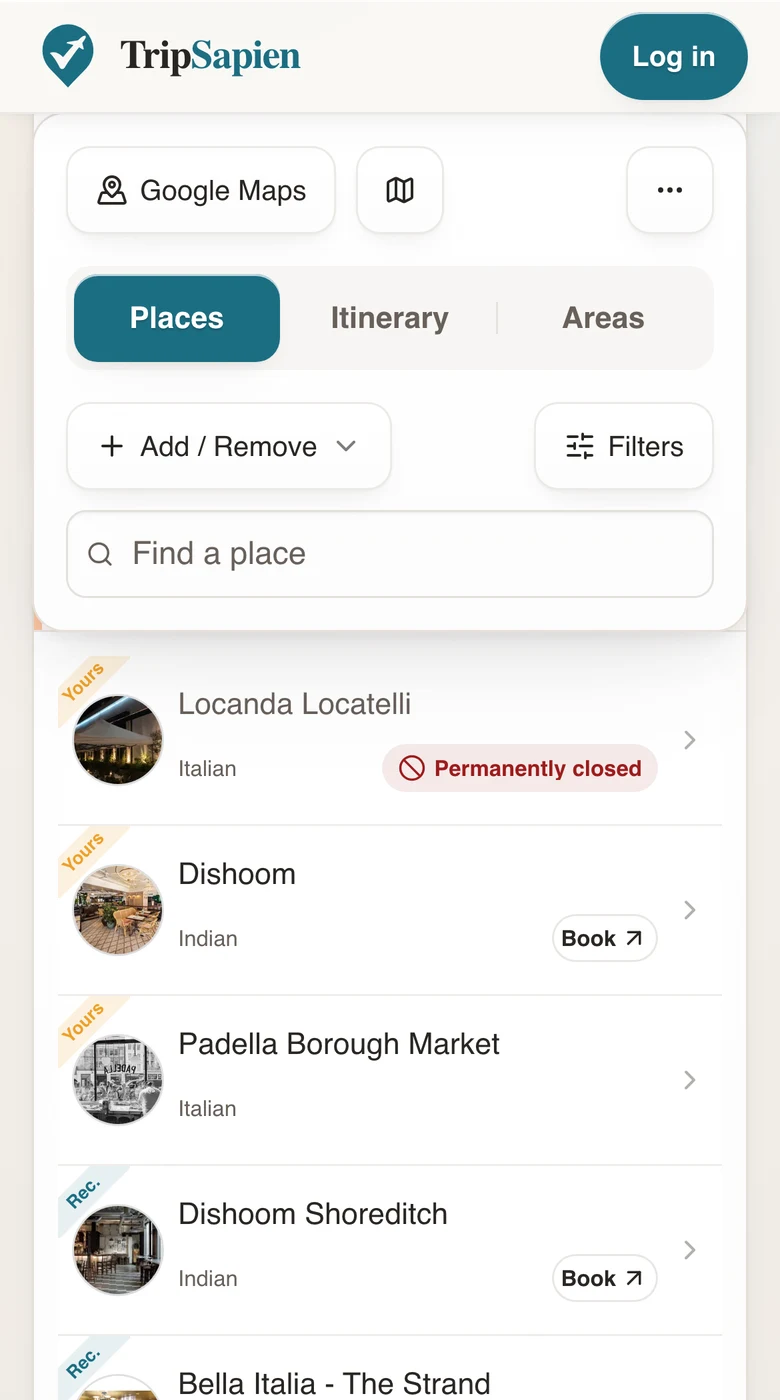
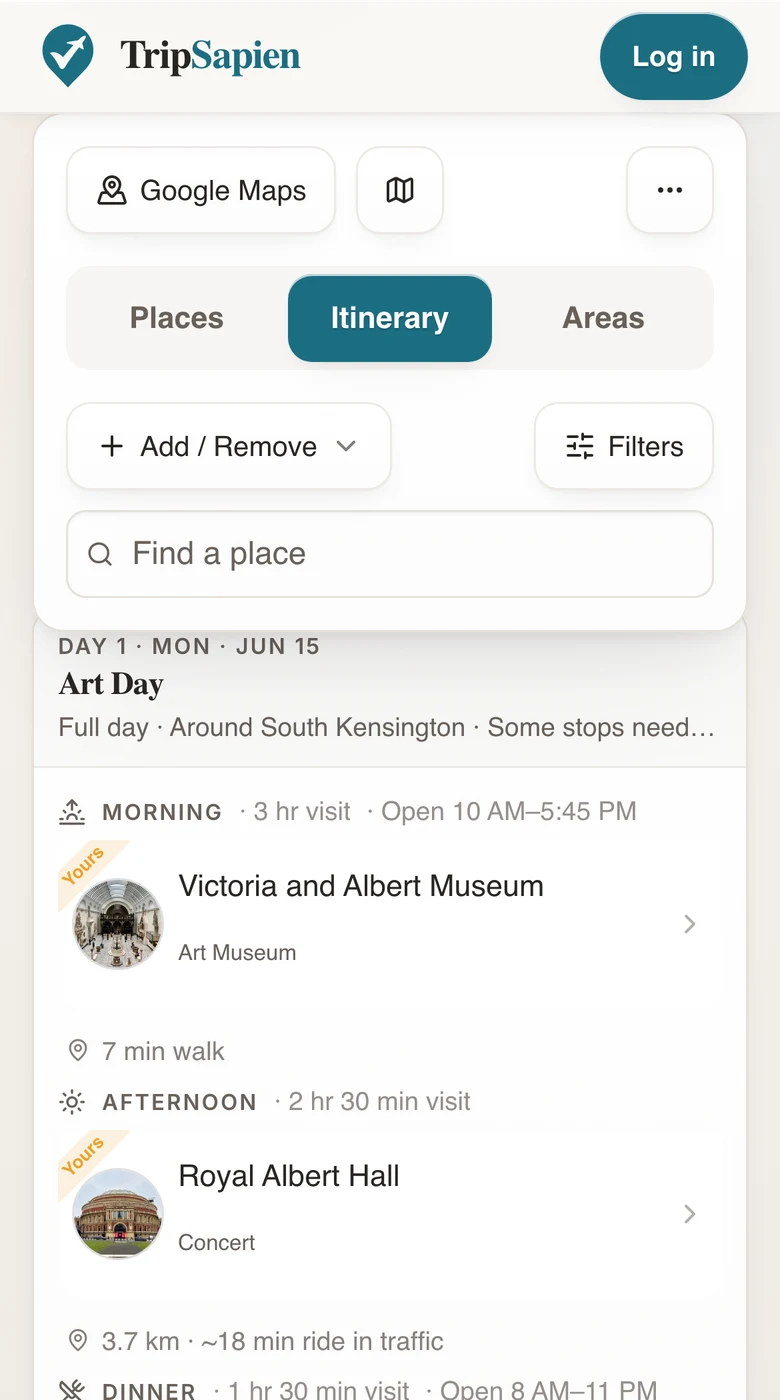
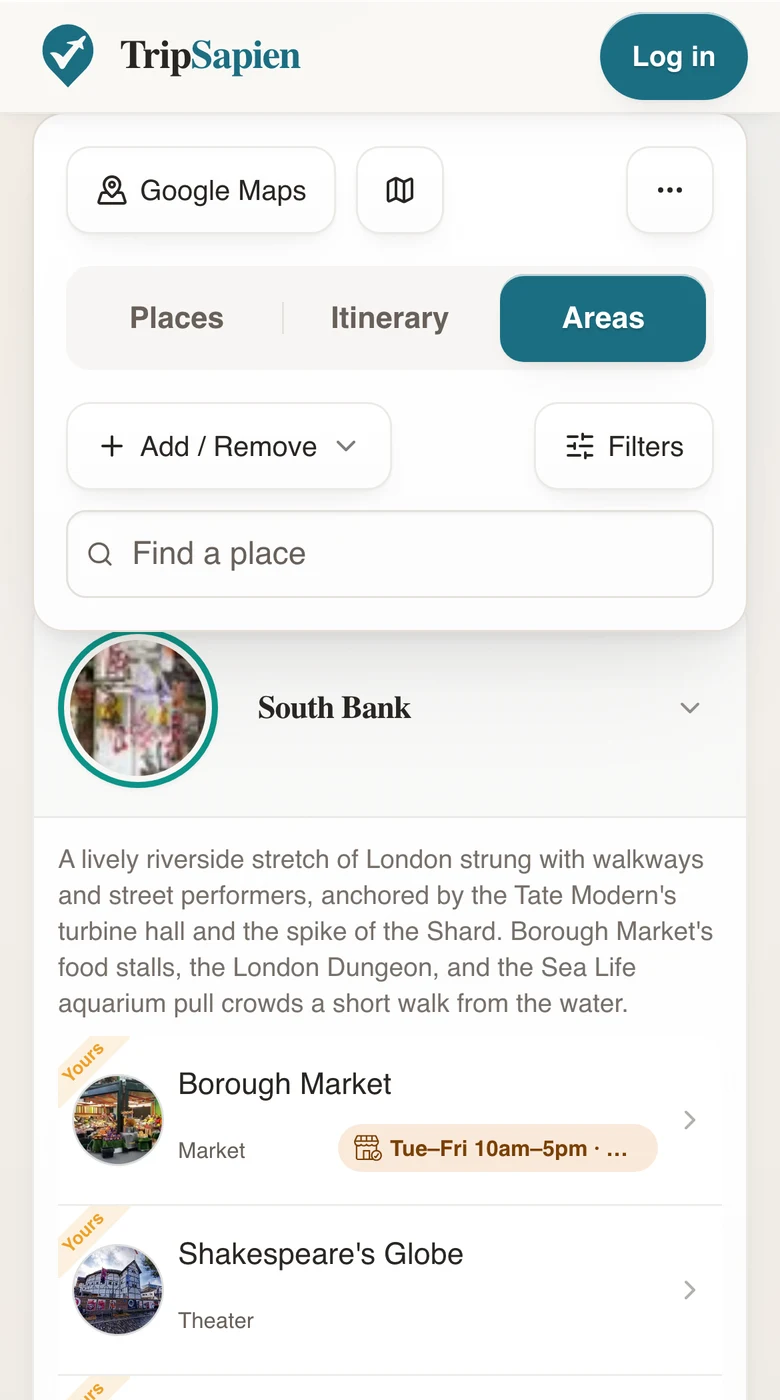
- Pick a city and dates; pasting research is optional. Places come from a 420,000-venue catalog, checked against your exact dates and grouped into neighborhood days.
Opportunity
Trip planning eats 18 hours per trip — and it is moving into AI.
~25 million US adults formally plan trips, and each one costs about 18 hours of planning and booking. The work is moving into AI: 37% of US travelers now plan with it.
The bet: paste your messy research — friends' texts, blog lists, a ChatGPT draft — and AI turns it into one organized trip that grows a library of real itineraries.
What I learned
The organizer worked. ChatGPT kept the planners.
The organizer shipped and worked. Travelers used it — then went back to ChatGPT to keep planning. Organizing a paste was a convenience, never a reason to switch.
The durable problem was the one AI planning had just created: 90% of AI itineraries contain at least one inaccuracy, and 1 in 4 recommends a closed venue. Verification became the work. The product to build was the checker.
Pivot & results
Become what AI planning made necessary: the checker.
What changed
Became the checker. The homepage stakes the claim — “Zero AI hallucinations” — and every place resolves against a vetted catalog of ~420k places, checked against the trip's actual dates.
Kept the recommendation flywheel. The catalog grows by thousands of places a day; the paste is now optional.
Rebuilt acquisition on free public data. Long-tail city-month pages carry the search traffic; free Foursquare and OpenStreetMap data replaced the paid-lookup cost wall.
Measured results
6,936
Google clicks on city-month pages
772
visitors referred by AI assistants, most from ChatGPT
Corrections & failed tests
52%
of raw search visitors were automated crawlers — removed from conversion reporting
22 cut → 20 restored
cities cut as duplicates by one test, restored by three — the wrong audit stays on file
What's next
Neighborhood pages shipped in late July; the ranking verdict comes when the indexing window closes.